
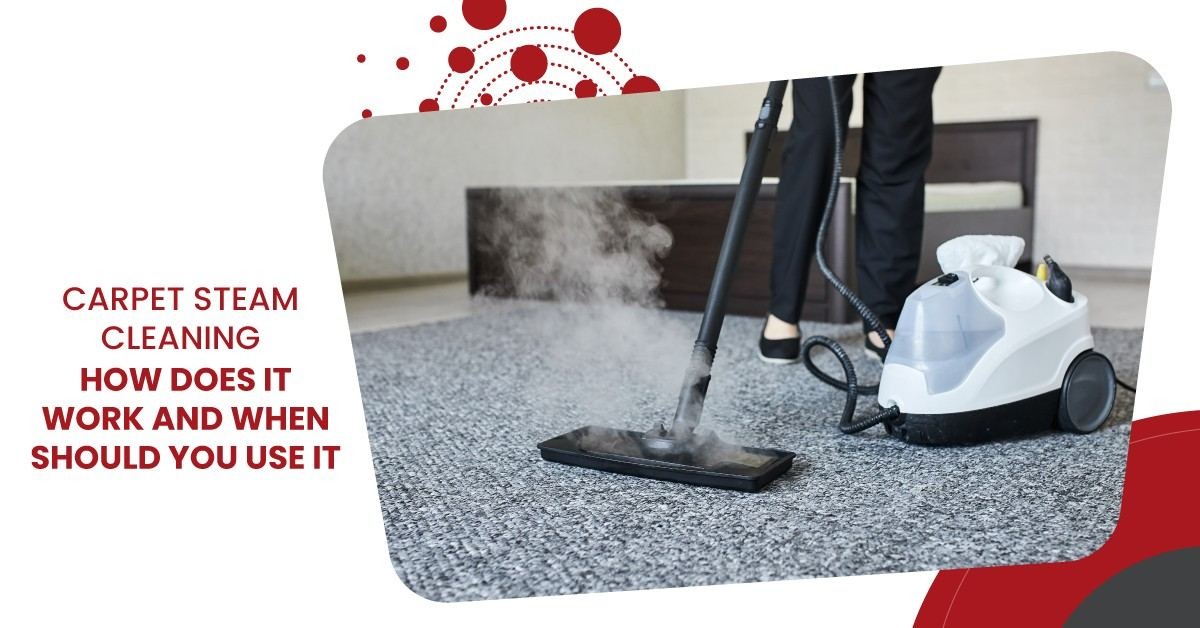
Carpet steam cleaning uses hot water extraction to loosen and remove dirt, stains and residue from carpet fibres. It is useful for heavily used carpets, high-traffic areas, lingering odours and periodic professional cleaning. The process involves inspection, vacuuming, pre-treatment, hot water application, extraction and drying. Steam cleaning suits many residential and commercial carpets, but the best method depends on fibre type, carpet condition, moisture sensitivity and manufacturer care instructions.
Regular vacuuming removes loose dust and surface debris, but it cannot always reach dirt deeper inside carpet fibres. Over time, spills, soil and daily foot traffic can leave carpets looking dull or less fresh.
Carpet steam cleaning is often considered when routine cleaning is no longer enough. It can help refresh carpets, lift embedded grime and treat many common stains. However, steam cleaning is not automatically the right choice for every carpet. Understanding how it works, when to use it and what to expect afterwards can help homeowners and businesses make a better cleaning decision.
What Is Carpet Steam Cleaning?
Carpet steam cleaning commonly refers to hot water extraction, a professional method designed to clean below the carpet surface. Despite the name, the process does not rely on steam alone. Heated water, sometimes combined with a suitable cleaning solution, is applied to the carpet and then extracted along with loosened dirt and moisture.
The aim is to remove soil that ordinary vacuuming cannot reach. Professional equipment controls water pressure and extraction strength while reducing unnecessary moisture.
For many carpets, hot water extraction provides a deeper clean than surface treatments. However, suitability depends on the carpet material, backing, condition and care requirements.
How Does Carpet Steam Cleaning Work?
Professional carpet steam cleaning follows several stages.
First, the carpet is inspected to identify fibre type, stains, high-traffic areas and signs of damage. This helps determine whether steam cleaning is appropriate.
Next, the carpet is vacuumed to remove loose dust, hair and debris. Heavily soiled areas may receive a suitable pre-treatment to loosen stubborn marks.
Hot water and an appropriate cleaning solution are applied to the carpet fibres. Professional extraction equipment then draws out the water together with dissolved soil, grime and cleaning residue.
The carpet is usually given additional extraction passes where needed to remove as much moisture as practical. Ventilation, fans or air conditioning can then help the carpet dry.
Brisbane Commercial Cleaning & Pest Control uses professional carpet-cleaning equipment and selects methods according to the carpet type, level of soiling and cleaning requirements.
When Should You Use Carpet Steam Cleaning?
Steam cleaning can be useful when carpets need more than routine vacuuming or basic spot cleaning.
It may suit high-traffic areas where dirt is embedded in the fibres, such as hallways, living rooms, office walkways and reception areas. It can also help with many food, drink and general household stains when the stain and carpet type are suitable for wet cleaning.
Homes with children or pets may benefit from periodic deep cleaning because carpets can collect soil, spills and odours more quickly. Offices, shops and other commercial premises may also require deeper cleaning because of frequent foot traffic.
There is no single steam-cleaning schedule that suits every property. Cleaning frequency depends on carpet type, household size, pets, children, traffic levels, workplace use and how quickly the carpet becomes visibly soiled.
Benefits of Carpet Steam Cleaning
One benefit of steam cleaning is its ability to remove dirt from deeper within the carpet rather than only cleaning the surface. Hot water extraction can loosen embedded soil and allow professional equipment to remove much of the moisture and residue at the same time.
Steam cleaning can also improve the appearance of carpets affected by everyday dirt, traffic marks and suitable stains. For businesses, cleaner carpets can help maintain a presentable environment for employees, customers and visitors.
Another advantage is versatility. Hot water extraction can be used on many residential and commercial carpet types when the manufacturer allows wet cleaning.
Good extraction is important because leaving too much cleaning product or moisture behind can slow drying and contribute to rapid resoiling.
What Can and Cannot Be Steam Cleaned?
Steam cleaning is suitable for many synthetic carpets, including nylon and polyester, as well as many commercial carpets designed for hot water extraction. It can also work well on heavily used areas where embedded dirt and grime need deeper cleaning.
However, not every carpet should be steam cleaned. Some wool carpets, natural-fibre rugs, antique or handmade rugs, moisture-sensitive backing and carpets with unstable dyes may require a different method. Carpets affected by mould, serious water damage or structural problems should also be assessed before wet cleaning.
Always check the manufacturer’s care instructions first. If the carpet type is unclear, a professional assessment can help determine the safest cleaning method.
When Is Steam Cleaning Not the Best Option?
Steam cleaning is not suitable for every carpet. Some delicate fibres, speciality rugs and natural materials may react poorly to heat, moisture or certain cleaning products. Carpets with unstable dyes or moisture-sensitive backing may also need a different method.
Wet cleaning may be less practical where ventilation is poor or the carpet must be ready quickly. Specialist treatment may also be required for difficult stains, water damage, mould concerns or contamination below the carpet surface.
Before cleaning, check the carpet manufacturer’s care instructions where available. If you are unsure about the fibre type or condition, professional assessment can help reduce the risk of shrinkage, colour movement or other damage.
Carpet Steam Cleaning vs Dry Carpet Cleaning
Steam cleaning and dry carpet cleaning serve different needs, so neither method is automatically better.
Steam cleaning uses hot water extraction to reach deeper into carpet fibres and remove loosened dirt with powerful suction. It is often chosen for periodic deep cleaning, heavily used carpets and areas with embedded soil.
Dry carpet cleaning uses less moisture and generally allows the carpet to return to use sooner. Depending on the system, specialised compounds or low-moisture cleaning products are worked through the carpet and then removed.
The right option depends on carpet construction, soiling, stain type, available drying time and manufacturer recommendations. A professional cleaner can assess these factors before recommending a method.
How Long Does Carpet Take to Dry After Steam Cleaning?
Drying time varies, but many carpets need several hours before they are fully dry. The exact time depends on carpet thickness, fibre type, how much water was used, extraction efficiency and indoor airflow.
Brisbane’s humid conditions may slow evaporation, particularly when windows are closed and airflow is limited.
To support drying, improve ventilation where practical, use fans or air conditioning and avoid unnecessary foot traffic while the carpet is damp. Furniture should not be returned too early, especially if metal feet or timber surfaces could contact moist carpet. A professional cleaner can provide aftercare advice based on the carpet and conditions on the day.
Frequently Asked Questions
Is steam cleaning suitable for all carpets?
No. Many carpets can be steam cleaned, but suitability depends on fibre type, backing, dyes and manufacturer instructions. Delicate or moisture-sensitive carpets may require a lower-moisture or specialist cleaning method.
How often should carpets be steam cleaned?
There is no fixed schedule for every property. Homes with pets, children or heavy foot traffic may need deeper cleaning more often, while lightly used rooms may need it less frequently. Commercial properties may require cleaning based on visitor numbers, workplace activity and presentation standards.
Conclusion
Carpet steam cleaning can be an effective option when carpets need deeper cleaning than routine vacuuming can provide. It is particularly useful for embedded dirt, high-traffic areas and many common stains, but carpet type and care instructions should always guide the method.
For Brisbane homes and businesses, Brisbane Commercial Cleaning & Pest Control provides professional carpet cleaning with methods selected to suit the carpet’s condition and cleaning needs. Choosing the right approach can help achieve a cleaner result while protecting the carpet.